
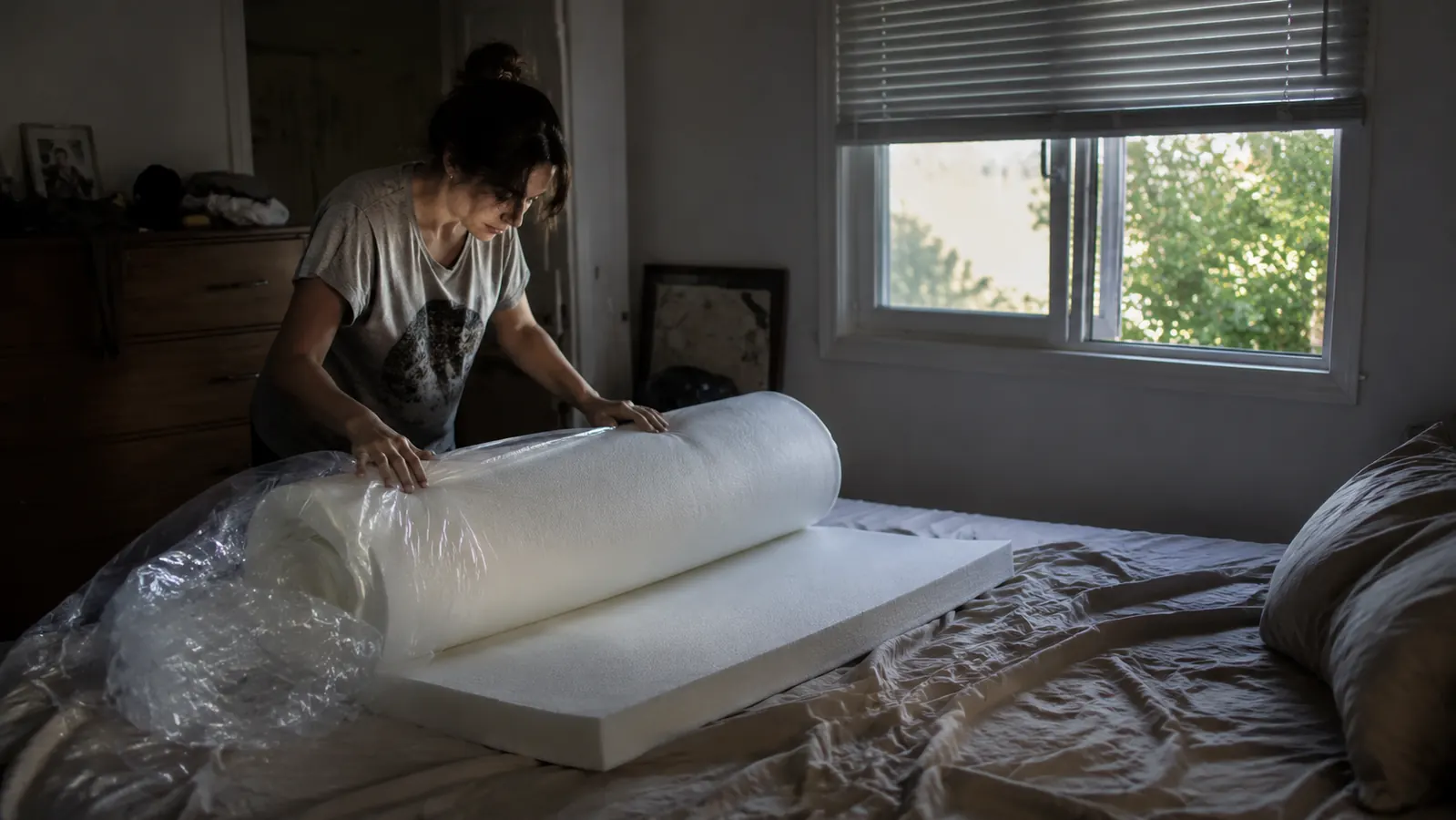
Let me tell you what I did not notice until I actually read the one-star reviews. Not the total count of them, which is tiny relative to 103,000, but the pattern inside them. Returns cluster around three things: the smell that lasted longer than expected, the edge softness that made getting out of bed genuinely harder, and a compression curve in the first six months that some people found alarming. I have been sleeping on the Lucid 3-inch gel topper for close to six months now, and every one of those complaints has some truth to it. The question is whether they are dealbreakers or just inconveniences you adapt to. That is what this review is about.
I want to be honest about my angle here: I did not buy this topper expecting problems. I bought it because a hundred thousand people seemed to love it and the price was right. I am not writing a hit piece. I am writing the review I wish I had found before I bought it, the one that would have told me what to actually prepare for so I was not caught off guard on night one.
The Quick Verdict
The pressure relief is real and it does deliver on its core promise for side sleepers. But the off-gassing window is longer than advertised, the edge compression is a daily lived experience (not just a footnote), and the fitted-sheet situation requires a separate shopping trip nobody warns you about. Go in with eyes open and it is a solid buy. Go in expecting a seamless overnight fix and you will be frustrated.
Amazon Check Today's Price →If a firm mattress is costing you sleep every night, waiting costs more than this topper does.
The Lucid 3-inch gel topper has over 103,000 ratings and ships to your door. Read this whole review first so you know what to prepare for, then check today's price and decide.
Amazon Check Today's Price on Amazon →The Off-Gassing: What Nobody Tells You About the Timeline
Most reviews that mention off-gassing handle it like this: 'It smelled a little when I first opened it but it went away after a day or two.' That sentence is technically true for some people and a complete understatement for others. Here is what actually happened in my bedroom, with specificity.
Day one: I opened the box, cut the plastic wrap, and the smell hit immediately. Not a faint chemical note. A genuine, room-filling chemical smell that I would describe as somewhere between a new car interior and a hardware store aisle. I live in a 900-square-foot apartment. I opened both bedroom windows, turned on the exhaust fan, and closed the bedroom door. By hour four I could still smell it from the hallway with the door shut. My partner, who is not particularly smell-sensitive, mentioned it without me bringing it up first. That is a meaningful data point.
Day three: noticeably better. The smell was present but you had to be in the room for a minute before registering it. I slept in the room starting on night three because I did not want to wait any longer, but I kept the windows cracked. Some people with chemical sensitivities or respiratory sensitivities should genuinely plan for a five-to-seven day window before sleeping on this. The CertiPUR-US certification means the chemicals are below safety thresholds, but it does not mean zero VOC off-gassing, and it does not mean you will not be bothered by the smell. Day seven for me it was essentially gone. Day ten, completely undetectable.
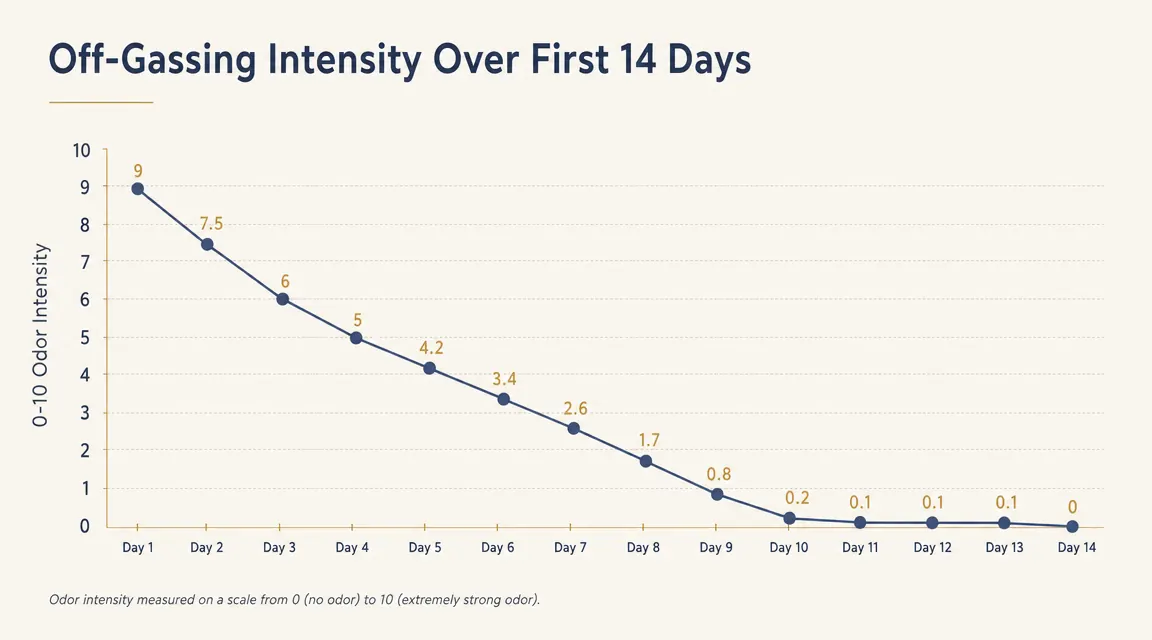
The one-star review thread on this product has a cluster of people who returned it specifically because the smell lasted beyond ten days. Reading those carefully, I noticed they were almost uniformly in smaller spaces with limited ventilation, or in climates where opening windows was not an option in the season they bought it. If you are buying this in winter in a cold climate, plan for the smell to linger longer. Warmth and airflow accelerate off-gassing. A sealed, climate-controlled bedroom in January in Minnesota is a different situation than my apartment in a mild climate with windows open. Account for your specific conditions.
The Edge Sink: More Than a Minor Inconvenience
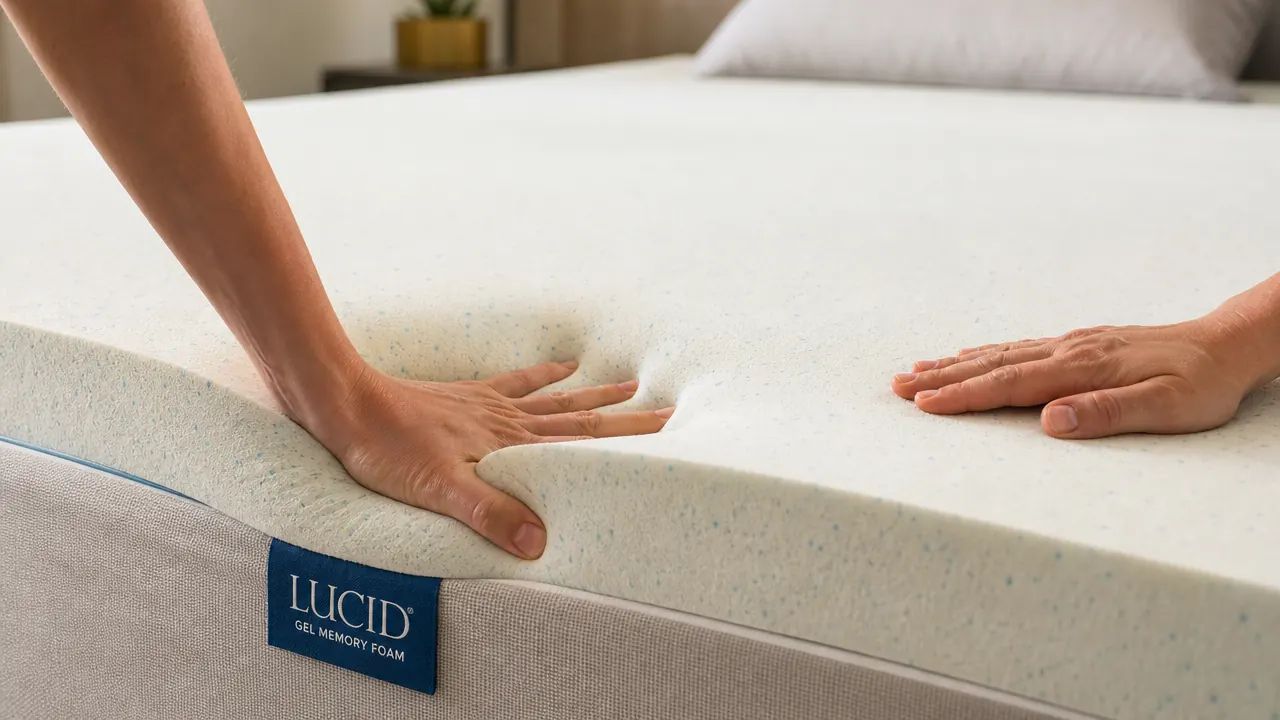
The review_a reviews and even the official product descriptions mention edge compression as a trade-off. What they do not capture is what it is like to experience this every single morning for six months. When you sit on the side of the bed to put on socks, stand up, or get dressed, the edge of a 3-inch memory foam topper compresses dramatically. Not a little. Dramatically. You feel like you are perched on the edge of a soft sofa cushion, and pushing yourself up from that surface takes noticeably more effort than getting up from a firm mattress edge.
I am 44 years old, reasonably mobile, and this is just a slightly annoying feature of my daily routine now. My mother-in-law visited for a week and stayed in the guest room, which does not have a topper. After one day she mentioned that getting out of bed in the morning felt much easier in the guest room. She is in her early 70s, has some knee stiffness, and was not being asked about the beds. She volunteered it. That is when I started thinking about this more seriously as a functional drawback rather than a footnote.
If you have any mobility limitation, knee pain, hip replacement recovery, or simply find yourself needing a firm surface to push off from when standing up, a 3-inch foam topper genuinely changes that calculus. This is not a minor specification note. It is a morning routine change that affects you every day. The review_a reviews mention it politely. I am telling you it is the most underestimated day-to-day reality of owning this topper.

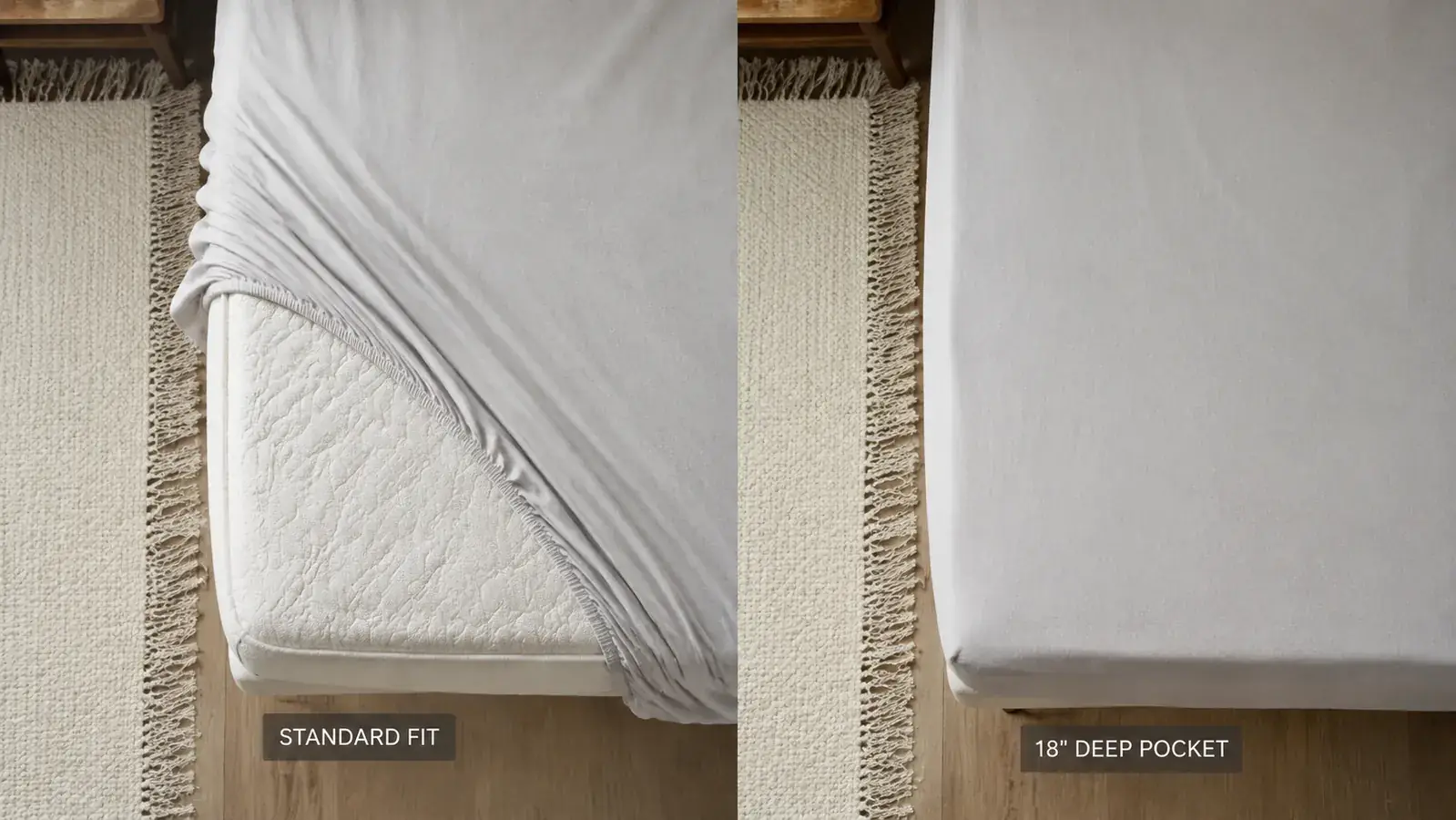
The Fitted Sheet Problem: A Shopping Trip You Did Not Budget For
Three inches of foam on top of your mattress adds three inches to the total profile your fitted sheet has to wrap around. Most standard fitted sheets are designed for mattresses up to 12 or 14 inches deep. Most modern queen or king mattresses are already 12 to 14 inches on their own. Add a 3-inch topper and you are at 15 to 17 inches, minimum. Standard fitted sheets will either not reach the corners at all, or they will stretch so tight that they pull off during the night and you wake up on a bare foam surface.
I did not know this before the topper arrived. I put my standard queen fitted sheet on, tucked it firmly, went to sleep, and woke up at 2am with the sheet bunched under me and the foam exposed. I spent ten minutes in the dark re-tucking a sheet that was physically too small for the job. I ordered deep-pocket sheets (18-inch depth) the next morning. They arrived two days later and the problem was solved completely and immediately. But that is an unplanned purchase on top of a purchase you just made, and nobody in the product listing or in the majority of reviews warned me that this was coming.
Deep-pocket queen fitted sheets run anywhere from $20 to $60 depending on material. If you are already buying the topper, add a line item in your budget for sheets before you open the box. It is not a crisis, but it is an annoying surprise that can sour your first impression of an otherwise solid product.
Heat Retention: Honest Six-Month Assessment
I want to be careful here because this one is genuinely individual. In the early months, through February and into March, I did not wake up hot. The gel infusion makes a difference compared to standard memory foam, and with a ceiling fan running and light cotton sheets, the topper was not a heat problem. I was prepared for worse.
But late May through now, sleeping has gotten warmer. June has been the test I was waiting for. I sleep warmer on this foam surface than I did on my uncovered innerspring mattress. The gel does not make the foam neutral, it makes it less bad. If you already sleep cool and are not a warm sleeper, the gel infusion is probably enough. If you sleep warm and are in a climate with hot summers, you are going to need either active cooling, a high airflow room, or to accept that summer nights on this topper will be warmer than you want.
The people who return this in June and July often cite heat as the primary complaint. Reading their timelines, most of them had fine winters and springs on it and only hit the wall in peak summer. If you live in a climate with air conditioning and keep your bedroom at 68 or below, this probably never becomes a problem. If your bedroom runs warm and you are hoping the gel claim handles it, I would manage that expectation down.
The gel infusion does not make the foam cool. It makes it less hot than standard memory foam. In a warm bedroom in July, that distinction matters a lot.
Long-Term Compression: What the Six-Month Mark Feels Like
Memory foam compresses over time. That is not a flaw, it is physics. The question with any topper is how fast it happens and whether the compression is even or creates body impressions. At the six-month mark, the Lucid topper has softened compared to month one. The center of the bed, where the majority of body weight lands, feels perceptibly softer than the edges and the foot of the bed. I would not call it a body impression yet, but the firmness gradient is noticeable if you press on different areas.
This is where the undisclosed density becomes frustrating. If Lucid published the foam density in pounds per cubic foot, you could look at independent research on compression rates and make a prediction about the two-year and three-year performance. Without that number, you are making a bet based on other people's anecdotes. The review threads at the twelve-month mark show some users reporting significant softening, others reporting no change. Sample size variation, weight, sleep position, and climate all play roles. What I can tell you is that at month six, the topper still functions well. I cannot promise you month eighteen.
If durability is your primary concern, consider that the Lucid price point reflects a mid-tier product. Higher-density foam toppers in the 4-pound-per-cubic-foot range from brands like ViscoSoft or Purple tend to cost more and compress more slowly. For a full breakdown of how the Lucid performs against the ViscoSoft over time, see my Lucid vs ViscoSoft mattress topper comparison. The short answer: if you plan to use this for three or more years, the extra cost of a higher-density topper is probably worth it. If you want relief now on a tighter budget, the Lucid holds up well enough for the first year.
Who Actually Returns This and Why
I spent time reading the one-star and two-star reviews carefully, which represent roughly 4 to 5 percent of the total review count. The returns cluster into four distinct groups. First: people with chemical sensitivities who could not tolerate the off-gassing window and did not know it was coming. Second: hot sleepers in warm climates who expected the gel to neutralize heat retention completely and were disappointed by summer performance. Third: people with mobility issues, joint pain, or recent surgery who found the edge compression made getting in and out of bed significantly harder. Fourth: buyers who expected the topper to compensate for a deeply sagging mattress base, which it cannot do.
Almost none of the negative reviews complain about the pressure relief for side sleeping, which is genuinely the topper's strength. The one-star reviews are overwhelmingly about the four issues above, and critically, most of those issues could have been anticipated with better pre-purchase information. Which is exactly why I wanted to write this review.
What I Liked
- Pressure relief for side sleepers is real and sustained, the core promise holds up over six months
- CertiPUR-US certification provides documented safety standards for the foam materials
- At this price point, the cost-per-night of better sleep is genuinely low, even factoring in the sheet purchase
- More than 103,000 reviews give you a credible long-term durability signal before you commit
- For firm mattresses in good structural condition, this does a meaningful job of softening the sleep surface without replacing the whole bed
Where It Falls Short
- Off-gassing is significant and lasts 7 to 10 days in average ventilation, not 24 to 48 hours as commonly implied
- Deep-pocket sheets are a required additional purchase that no listing or review warns you about clearly
- Edge compression is a daily lived experience that affects getting in and out of bed, not just a spec note
- Foam density is not published, making it harder to predict compression longevity against competitors
- Heat retention is real in warm climates and warm bedrooms, the gel infusion helps but does not eliminate the issue
- Long-term compression after 12 to 18 months appears to vary significantly based on user weight and sleep position
Who This Is For
Buy this topper if you are a side sleeper on a firm but structurally sound mattress, you have a well-ventilated bedroom, you sleep in a climate-controlled space or a mild climate, and you are mobile enough that edge compression is a minor annoyance rather than a functional barrier. If you are also prepared to order deep-pocket sheets before the topper arrives, you will sidestep the most common first-night frustration. In that scenario, the Lucid 3-inch topper is genuinely good value and will likely deliver real pressure relief within the first two to three weeks of use. For context on how hot sleepers can set up their bedroom to get the most out of a gel topper, the guide on cooling down with a gel mattress topper covers room setup, sheet choice, and airflow strategies in detail.
Who Should Skip It
Skip this topper if you have chemical sensitivities or respiratory sensitivities and cannot tolerate a 7 to 10 day off-gassing period. Skip it if you have mobility challenges that make edge compression a safety or comfort issue. Skip it if your bedroom runs warm in summer and you do not have reliable air conditioning, because the heat story gets meaningfully worse above 70 degrees ambient. Skip it if your base mattress has visible sagging or body impressions, because three inches of foam will not bridge that structural failure. And skip it if you are planning to use an adjustable base with head or foot elevation, because the foam will resist articulation and shift out of position over time. In any of those cases, the topper's genuine strengths cannot overcome the fit problem.
Go in knowing what to prepare for and this topper earns its 4.4-star rating. Go in blind and the first week is rougher than it needs to be.
Order your deep-pocket sheets at the same time. Give it five days for off-gassing before your first night. And if you are a side sleeper on a firm mattress with a cool, ventilated room, there is a real chance this is the best $100 you spend on your sleep this year.
Amazon Check Today's Price on Amazon →