
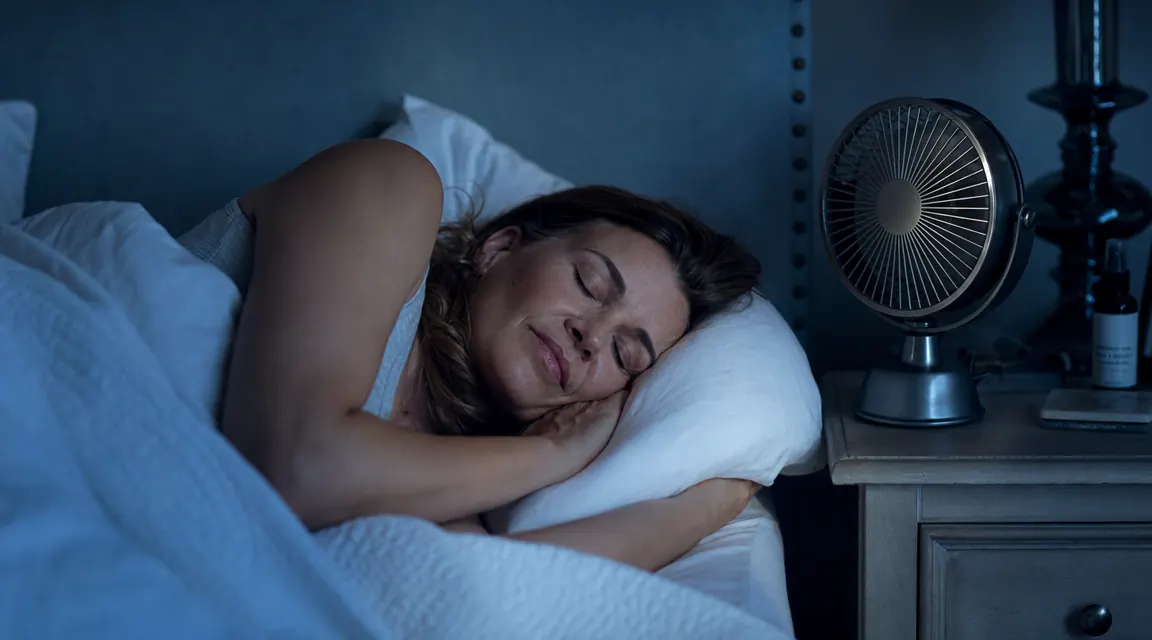
Here is how I know you are a hot sleeper and not just someone who keeps the thermostat too high: you wake up at roughly the same time every night, usually between 1am and 3am, and your pajamas are damp. You flip the pillow to the cool side. You kick the blanket off. You lie there calculating whether opening the window will wake your partner. And then you are up for an hour. I did this for four years before I figured out that the problem was not my room temperature. It was my mattress surface, which was trapping my body heat and radiating it back up at me like a heated seat set on medium.
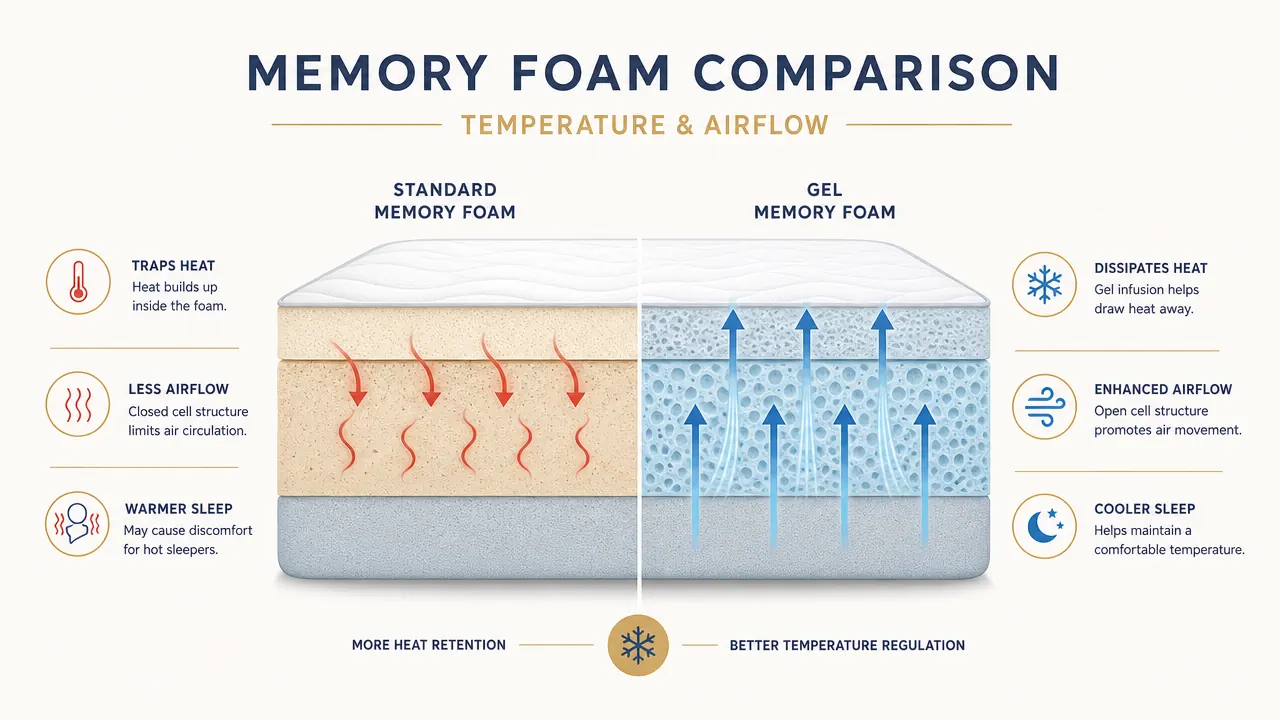
Standard memory foam is exceptionally good at two things: conforming to your body and holding heat. The same dense, slow-response structure that makes it feel so supportive also blocks airflow and acts as insulation. If you have a foam mattress or a traditional foam topper, it is basically a thermal blanket wrapped around your torso. Gel-infused foam is a direct response to that problem, and it works differently enough that the fix is real, not marketing. But only if you set it up correctly. This guide walks through exactly how to do that.
Stop waking up at 2am because you're overheated. The Lucid 3-inch gel topper has 103,000 reviews for a reason.
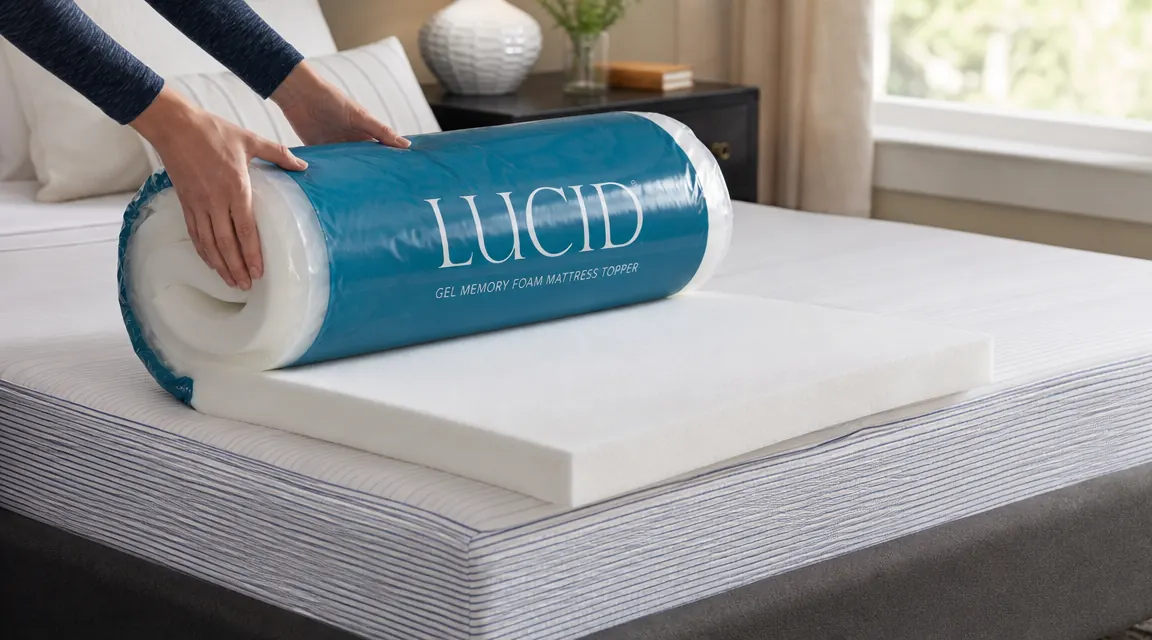
The Lucid 3-inch Cooling Gel Memory Foam Topper is the most-reviewed foam topper on Amazon and consistently tops heat-sleep complaints for one straightforward reason: the open-cell gel infusion actually moves heat away from your body instead of pooling it.
Amazon Check Today's Price on Amazon →Step 1: Diagnose Whether Heat or Firmness Is Your Primary Problem
Before you buy anything, spend one night paying attention to when you wake up and what woke you. Hot sleepers typically wake between 1am and 3am, which is when core body temperature peaks during normal sleep cycles. If you are waking at this window and you feel hot, flushed, or damp, heat retention is your issue. If you are waking because of pain or pressure, your problem is firmness, and while a gel topper helps with both, you should know which one you are primarily solving for.
A secondary diagnostic: if you sleep cool on a firm surface (a guest room, a hotel bed, a camping pad) but wake up hot at home, the culprit is almost certainly your current mattress surface. If you wake up hot everywhere, the issue may be room temperature, humidity, or your bedding rather than the mattress. In that case, a gel topper is still useful but it is one part of a larger solution, which is covered in Step 5.
One more thing worth knowing before you proceed: body weight matters. People over 180 pounds tend to sink deeper into foam, which means more surface contact and more heat buildup. If this describes you, a 3-inch topper will make a bigger difference than a 2-inch one, and gel density becomes more important than for lighter sleepers.
Step 2: Choose the Right Gel Topper Thickness and Density
Gel memory foam toppers come in 2-inch and 3-inch profiles. The 2-inch version is fine for people under 160 pounds who sleep on their back or stomach and mostly need surface cooling. The 3-inch version is the one to buy if you are a side sleeper, if you weigh more than 160 pounds, or if your underlying mattress is noticeably firm. The extra inch of foam means less pressure on hips and shoulders, which reduces the amount of body-to-surface contact and lets air circulate slightly better.
Density, measured in pounds per cubic foot, tells you how durable and supportive the foam is. Most budget toppers run between 2.0 and 3.0 lb/ft3. Anything below 2.5 will compress quickly and lose its cooling properties as the open-cell structure collapses under nightly weight. The Lucid 3-inch Cooling Gel Memory Foam Topper hits the right density range for long-term performance without the significant price premium of higher-density specialty options. Its gel beads are distributed throughout the foam rather than just on the surface layer, which matters because surface-only gel wears off faster.
The same dense foam that makes memory foam feel so supportive also blocks airflow and acts as insulation. Gel-infused foam is a direct answer to that problem, and it works differently enough that the fix is real.
Step 3: Prepare Your Bed Correctly Before Installing the Topper
Most people unbox the topper and throw it directly on the mattress. That works, but there are two things worth doing first that most people skip. First: vacuum your mattress. Even a fairly clean mattress has skin cells and dust mites concentrated near the surface, and sealing a foam layer over that does not improve the situation. Second: let your mattress breathe for a few hours before adding the topper. If your mattress has any residual moisture from sweat (common in foam mattresses used for more than two years), trapping it under a foam topper accelerates odor buildup.
When the Lucid topper arrives, unroll it and let it expand for at least 24 hours before sleeping on it. All compressed memory foam off-gasses during expansion. The smell is not harmful, but it is noticeable, and it dissipates completely within 48 to 72 hours. Opening a window during expansion speeds this up considerably. Do not rush the setup by using it the same night it arrives. The foam needs time to reach its full thickness and the open-cell structure needs to breathe out before you breathe in.

Step 4: Layer Your Bedding in the Right Order
The topper goes directly on the mattress. Over it goes a fitted sheet, full stop. This is where most hot sleepers accidentally undo all the work they just did: they put a mattress protector between the topper and the sheet, or they use a thick padded mattress cover that re-insulates the surface. A waterproof mattress protector is a good idea for protecting the topper, but choose a thin, breathable one made of Tencel or cotton jersey rather than a vinyl or thick polyester version. Vinyl protectors block airflow almost completely. A thin cotton protector adds maybe one degree of surface temperature. A vinyl one adds five.
For sheets, the material matters more than thread count for hot sleepers. High thread count cotton (above 400) is actually less breathable than lower thread count cotton because the tight weave reduces airflow. Percale cotton (180 to 280 thread count), Tencel, or bamboo sheets will keep the gel surface doing its job. Sateen weaves and polyester microfiber blends are the two sheet types that most consistently undo the work of a cooling topper.
Blanket choice follows the same logic. If you are already using a thick polyester comforter, the topper alone will not fully solve your overheating problem. Consider switching to a lightweight down-alternative duvet (or a real duck down duvet with a lower fill power rating around 550 to 600) that lets you stay covered without trapping body heat. A weighted blanket is a different situation and covered below.
Step 5: Pair the Topper with Room Temperature and Airflow
A gel topper reduces surface heat retention, but it does not refrigerate. For it to do its job well, the ambient room temperature needs to cooperate. The ideal sleeping temperature for most adults is between 65 and 68 degrees Fahrenheit. If your room is sitting at 74 or 75 degrees in summer, the topper will still help, but it will be working against a warm room rather than with a cool one. Running a ceiling fan or a box fan pointed at the foot of the bed adds meaningful airflow across the gel surface and helps dissipate heat faster.
One thing that surprised me: sleeping position affects how much the topper helps. Back sleepers tend to see the most dramatic improvement because they have continuous contact with the mattress surface. Side sleepers benefit significantly at shoulder and hip contact points. Stomach sleepers, who have the most total-body surface contact of any position, often see the largest drop in overnight waking from heat, but also the most variation based on room conditions. If you are a stomach sleeper on a warm night with no fan running, you may still wake up warm even on a gel topper. The fix is airflow, not a thicker topper.
A note on weighted blankets: some hot sleepers love them for the anxiety-reducing pressure, but conventional weighted blankets trap heat badly. If you want both cooling and pressure, use the gel topper as described, lower your room temperature by one or two degrees, and consider a weighted blanket with a cooling bamboo cover rather than the standard sherpa or fleece covers. The combination works well for most people who have tried it.
What Else Helps When the Topper Alone Is Not Enough
If you have done everything in this guide and you are still waking up warm, there are a few additional layers worth trying. First: your pillow. Memory foam pillows trap heat against your face and neck, which has a surprising effect on perceived whole-body temperature. Switching to a shredded foam or latex pillow with good airflow (or simply a buckwheat pillow, which sleeps remarkably cool) can make a meaningful difference alongside a gel topper. Second: your sleeping schedule. Core body temperature naturally drops as part of the sleep initiation process. Taking a warm shower 90 minutes before bed actually accelerates that drop and makes it easier for your body to cool down and stay cool in the early part of the night. Third: hydration. Mild dehydration significantly raises overnight body temperature and increases night sweating. Drinking 8 to 12 ounces of water an hour before bed helps stabilize overnight temperature regulation, especially in summer months.
For hot sleepers who have exhausted all the standard fixes, a dual-zone mattress cooling system (the kind with water circulation, like the Eight Sleep or ChiliPad platforms) is the next level of intervention, but those run several hundred dollars and are overkill for most people. The vast majority of hot sleepers who follow this setup correctly, from the gel topper choice through the bedding layering and room temperature management, report a dramatic reduction in overnight heat waking. The Lucid 3-inch gel topper is the most cost-effective starting point, and at 103,000-plus reviews it has been tested across a wide enough range of sleepers to give a realistic picture of what works and what does not.
Ready to stop waking up at 2am? The Lucid topper is the highest-rated cooling foam option at this price.
With 103,000+ Amazon reviews and a consistent pattern of hot-sleeper feedback, the Lucid 3-inch Cooling Gel Memory Foam Topper is the most trusted entry point for solving surface heat retention. Available in Twin through Cal King. Check today's price before stock changes.
Amazon Check Today's Price on Amazon →