
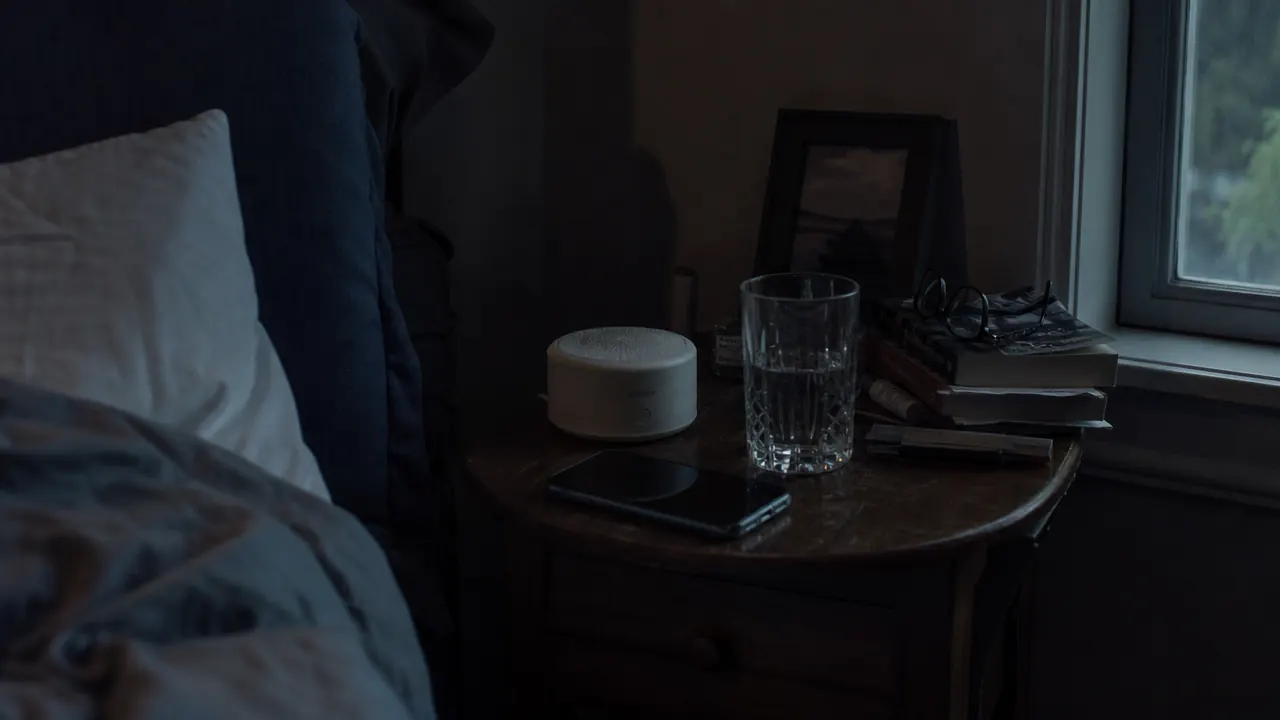
Let me tell you what nobody writing a five-star review bothers to include: the first two nights with the Yogasleep Dohm Classic were not good. I unpacked it, plugged it in, and was immediately greeted by a faint mechanical clicking that was absolutely not on any product listing. Not a buzz. Not a hum. An intermittent tick, like a clock with anxiety. I almost sent it back. I did not, and I am glad. But that opening chapter would not have made my review, either, if I had written it in week one.
This is not a repeat of my long-term Dohm write-up, which covers night-by-night results and what the fan-based sound does differently from digital alternatives. This piece is the one I wish had existed before I bought mine. It covers the things that generate returns, the things veteran Dohm owners mention in passing after three years of use, and the situations where the Dohm is genuinely the wrong choice no matter how much its fans love it. The Yogasleep Dohm Classic (ASIN B00HD0ELFK) is a 4.6-star machine with over 40,000 reviews. It deserves most of that rating. It also comes with a few quirks the crowd has collectively agreed to stop mentioning.
The Quick Verdict
Excellent at the specific job it was designed for, but the break-in noise, the volume ceiling, the single sound type, and the zero smart features will frustrate a meaningful percentage of buyers who do not read the fine print first.
Amazon Check Today's Price →If you already know you want the Dohm, the price on Amazon has been holding steady.
The Yogasleep Dohm Classic is one of the most consistently reviewed white noise machines on the market. Check today's price and current availability before reading further if you just need the verdict.
Amazon Check Today's Price on Amazon →The Break-In Period: What That Ticking Actually Is
The Dohm uses a real fan with real bearings. Real bearings, when they are new, sometimes have a break-in period. In my unit, the ticking I heard in the first two nights was the fan bearing seating itself. By night three, it was gone entirely. In the years since, I have heard nothing from the housing except exactly the fan sound I want. But this is a known phenomenon with mechanical fans, and Yogasleep's customer support will tell you as much if you contact them. The problem is that most buyers do not contact support. They assume the clicking is a defect, leave a two-star review saying the machine rattles, and return it before the bearing has time to settle.
The minority of units that click persistently beyond a week likely do have a genuine bearing issue, and those should be returned or exchanged. But if your new Dohm has a faint rhythmic click in the first 48 to 72 hours, give it three nights before deciding. Plug it in across the room, not directly on your nightstand, during that break-in window. You are not going to hear it from six feet away. The irony is that the very mechanism that makes the Dohm superior for long-term longevity, real moving parts instead of a digital playback chip, is also the mechanism that occasionally produces an anxious first weekend.
There Is No Volume Number. That Is Not an Accident.
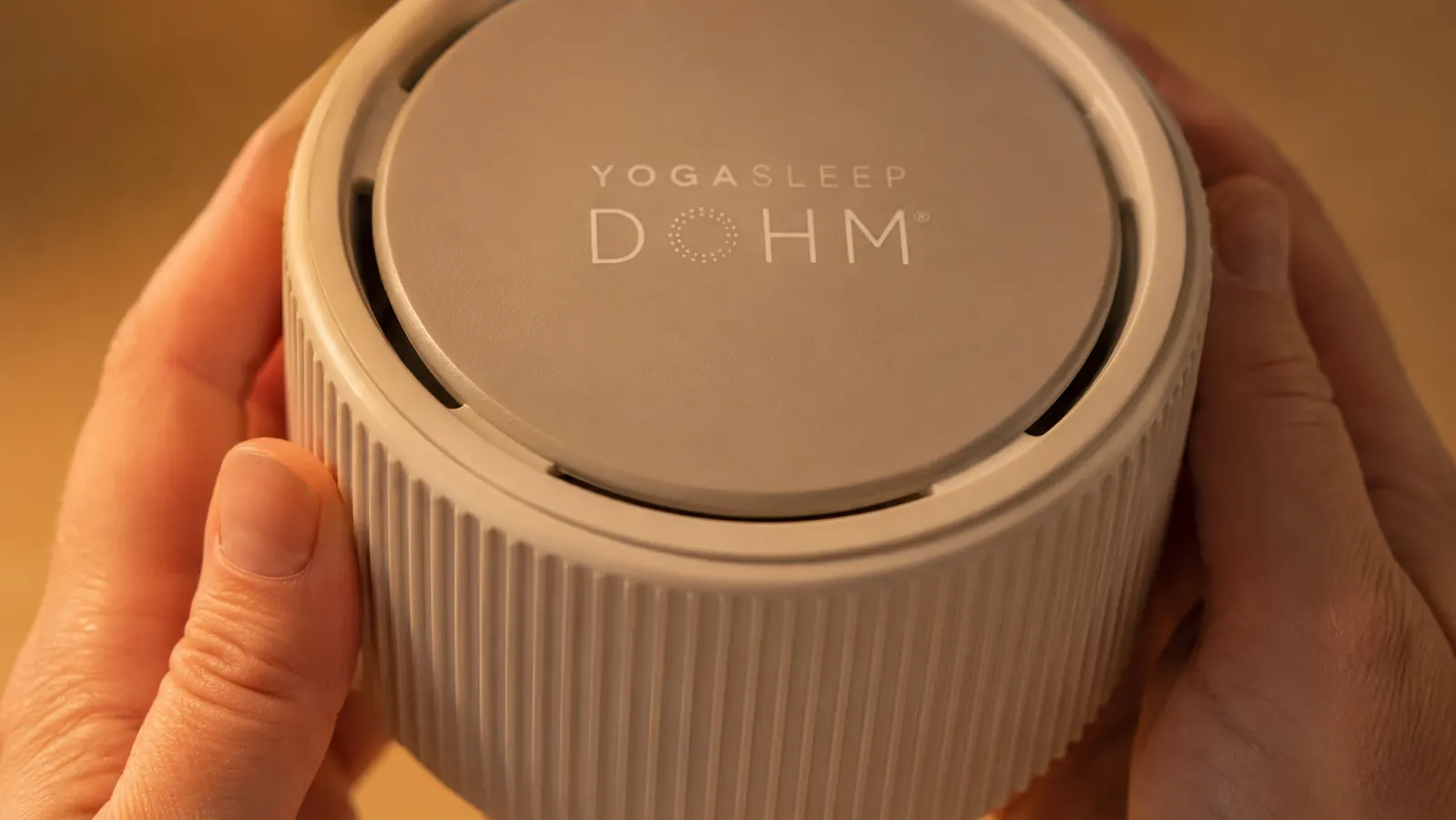
Every digital white noise machine has a volume readout, a number from 1 to 30, a percentage, a set of bars on a display. The Dohm has none of that. It has a collar and a cap, both rotational, both analog. You twist one to change the pitch. You twist the other to change the speed and overall loudness. There is no increment. There is no saved setting. There is no app. If you want to know how loud your Dohm is, you use your ears.
This bothers some people more than others. The buyers who return the Dohm most often cite the lack of precise volume control as the tipping point. They want to know they are running it at the same level every night. They want to share a setting with a partner by text. They want to feel like they are in control of the machine rather than in dialogue with it. Those are legitimate preferences, and the Dohm will not satisfy them. If measurable repeatability matters to you, a digital machine with a numbered scale is a better fit.
What I would tell the same buyers, if they gave me a minute: within about a week, your hands learn the setting. You develop a tactile memory for where the collar sits relative to the housing vent. The absence of a number stops feeling like a limitation and starts feeling like one fewer thing to think about at 11pm. But you have to get through that first week first, and not everyone does.
The Dohm has no volume number, no app, no timer, and no Bluetooth. For some people that is a fatal flaw. For others, it is the entire point. Knowing which camp you are in before you buy saves a return shipping label.
The Volume Ceiling: Real and More Limiting Than the Specs Suggest
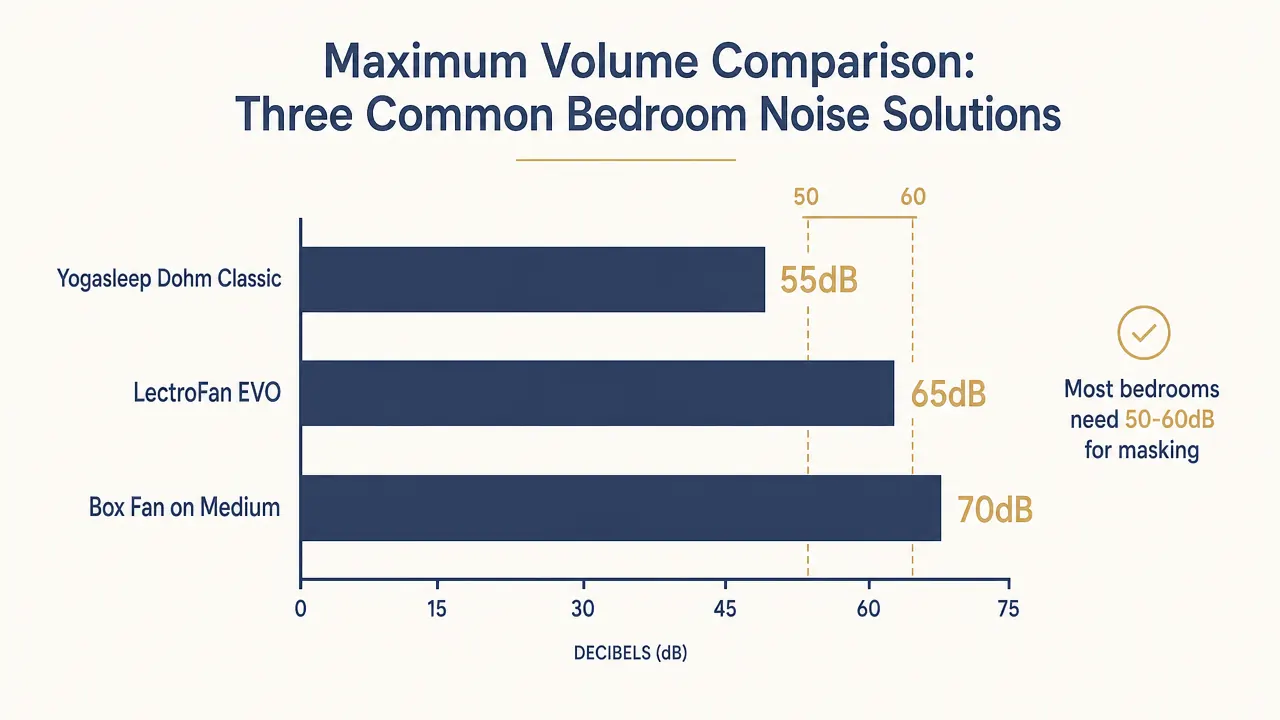
The Dohm is not quiet. At maximum, running with the collar fully open and the fan on high, it produces a sound roughly equivalent to a box fan on its lowest or medium setting from about two feet away. For most bedroom situations involving city traffic, a snoring partner at moderate levels, or hallway sounds from neighbors and kids, that is enough volume to do the masking job.
It is not enough for everything. If you are sleeping in a thin-walled apartment above a venue, or your partner's snoring regularly tops 60 decibels, or you live on a street where buses idle at red lights outside your window, the Dohm will mask some of that and let the worst spikes through. This is not a flaw in the Dohm's design. It is a fan in a housing the size of a grapefruit. Physics applies. But the 40,000-review crowd includes a meaningful number of people who bought it believing it would solve extremely loud environments, and those are exactly the people who return it.
The LectroFan EVO, by comparison, can push significantly more volume with its digital playback system and dedicated speaker. If you are trying to sleep through genuinely loud events, that machine scales higher. The tradeoff is that you lose the analog fan sound quality and gain a loop, however long, however subtle. For moderate noise environments, the Dohm wins on sound quality. For high-volume situations, the digital machine wins on pure output. Nobody should be surprised by that distinction, but many buyers are.
One Sound. One Tone Range. That Is the Whole Menu.
The Dohm produces one type of sound: fan-based airflow noise. Within that type, the collar-and-cap system gives you a narrow range from a softer, lower-pitched hum to a brighter, airier whoosh. Those are your options. There is no rain setting. No ocean waves. No brown noise, no pink noise, no binaural option, no sleep meditation track. If you have a strong preference for rain sounds at night, or you have read something about brown noise being better for anxiety, or you want to cycle through a few options depending on how your sleep is going, the Dohm is not your machine.
The buyers who are happiest with the Dohm long-term are almost universally people who wanted to hear something like a fan. Either because they grew up sleeping with a box fan running, or because they tried a white noise app and liked the basic fan preset best, or because their bedroom's existing ambient sound (an HVAC vent, a street outside) already has that quality and the Dohm extends and smooths it. If that is your preference, the Dohm delivers it better than any digital machine I have tested. If you are still exploring what kind of sound helps you sleep, start with an app first. The app is free. Find the category of sound you want before spending money on a dedicated machine.
No Timer. No Auto-Off. The Machine Runs Until You Stop It.
The Dohm has no timer function. It has no scheduled off. It does not connect to a smart plug's app natively. It runs continuously from the moment you plug it in and turn it on until the moment you reach over and turn it off. For most buyers, this is a non-issue. They leave it running all night and turn it off in the morning, if they remember to. I leave mine on through the day sometimes. It costs almost nothing to run, a fan motor this small draws roughly 5 to 10 watts, and the sound is neutral enough that it disappears from awareness when you are not thinking about it.
For a smaller group of buyers, the lack of a timer is a dealbreaker. Sleep hygiene research does suggest some benefit to not running audio through the entire sleep cycle, particularly through deep sleep stages where the auditory environment is processed differently. If you want a machine that runs for 60 or 90 minutes and turns off automatically, you need a digital machine with that feature. The Dohm does not have it and never has. A workaround is a third-party smart plug with a timer function, which runs about ten dollars and works fine, but it is an added step that should not have to be in the buyer's journey.

The Travel Problem: It Is Not a Travel Machine, and Pretending Otherwise Will Frustrate You
The Dohm Classic is cylindrical, roughly five inches in diameter and three inches tall. It weighs about a pound. It does not come with a travel case. The power cord is three feet long and non-detachable. None of that is designed for a carry-on bag or a hotel room. You can fit it in a checked bag, technically, if you pack it in the center surrounded by clothes and you are not already at the weight limit. But there are smaller, lighter, USB-powered travel white noise machines that cost thirty dollars and pack flat. Those are better travel options.
The buyers who complain about the Dohm's portability are often people who read the glowing reviews, bought it for home use, loved it, and then assumed it would translate to travel. It does not translate well. This is not unique to the Dohm, most quality bedside white noise machines are not travel-optimized. But the Dohm's particularly non-stackable shape and the non-detachable cord make it worse than average for packing. If you sleep away from home more than a few nights per month, buy a dedicated travel unit for those trips and keep the Dohm at home where it belongs.
What I Liked
- Genuine mechanical fan sound does not loop or repeat, which prevents the subtle sleep-disrupting anticipation pattern digital loops can create
- Build quality is solid enough that owners routinely report five to fifteen years of continuous use from a single unit
- No indicator light, no Bluetooth radio, no Wi-Fi chip, no app permission requests, no firmware that can fail
- Analog dial takes four seconds to adjust and requires no settings menu
- Effective at masking moderate urban noise, light partner snoring, and building ambient sounds
- 4.6-star average across more than 40,000 reviews reflects a genuinely consistent typical-use experience
Where It Falls Short
- Break-in ticking in the first 48 to 72 hours surprises owners who do not know to expect it and causes unnecessary returns
- No volume number or saved setting makes repeatability harder for buyers who want precision
- Volume ceiling is moderate. Loud environments will outpace it
- Single sound type with narrow tone range. No rain, ocean, brown noise, or sound variety
- No timer, no auto-off, no smart scheduling without a third-party plug
- Not travel-friendly. Non-detachable three-foot cord, bulky cylindrical shape, no case included
Who Returns It, and Whether That Sounds Like You
Having looked at the return patterns in the reviews and thought about who tends to come away disappointed, the profile is fairly consistent. Returns cluster around a few types: the buyer who expected silence (the Dohm adds sound, it does not remove it), the buyer dealing with a genuinely loud environment who needed more volume than a small fan can produce, the buyer who wanted rain or nature sounds and got a fan, and the buyer who heard the break-in ticking and concluded the unit was defective before giving it a week.
If none of those categories match your situation, and if what you are looking for is an organic, non-looping fan sound to mask moderate bedroom noise, your likelihood of joining the 40,000 satisfied reviewers is very high. The Dohm is not for everyone. It is, however, very specifically excellent for the people it is for. The honest review job is to help you figure out, before you order, which side of that line you are on.

Who This Is For
The Dohm Classic is for adults who want a permanent bedside fixture, not a gadget. It suits people who prefer analog controls and want nothing to charge, update, or pair. It works best in moderate-noise environments, city apartments with some street sound, suburban homes with thin walls, shared bedrooms where one partner is a light sleeper. It is also a particularly good fit for anyone who already knows they like fan sounds, either from sleeping with a box fan or from testing a fan preset in a white noise app. If that is you, buying the Dohm is just buying the refined version of something you already know works.
Who Should Skip It
Skip the Dohm if you live in a genuinely loud environment. It does not scale to construction-site-level intrusions, very loud snoring, or street noise that would require substantial decibels to mask. Skip it if you want sound variety, a timer, or any kind of smart control. Skip it if you travel regularly and want one machine for home and trips. Skip it if you need precise volume control and a numbered readout. None of those are irrational preferences. The Dohm just does not serve them. For how the Dohm compares against its main digital competitor on volume range and sound quality, see the full breakdown in our Yogasleep Dohm vs LectroFan EVO comparison. And if you are sorting out placement and setup for any white noise machine, the white noise machine setup guide covers positioning, volume level, and combining with other sleep aids.
Know what you are getting, and you will probably still love it. The Dohm has earned its reputation among the buyers it was built for.
Over 40,000 reviews, a 4.6-star average, and a design that has not fundamentally changed since 1962 because it does not need to. Check today's price and shipping options on Amazon.
Amazon Check Today's Price on Amazon →