
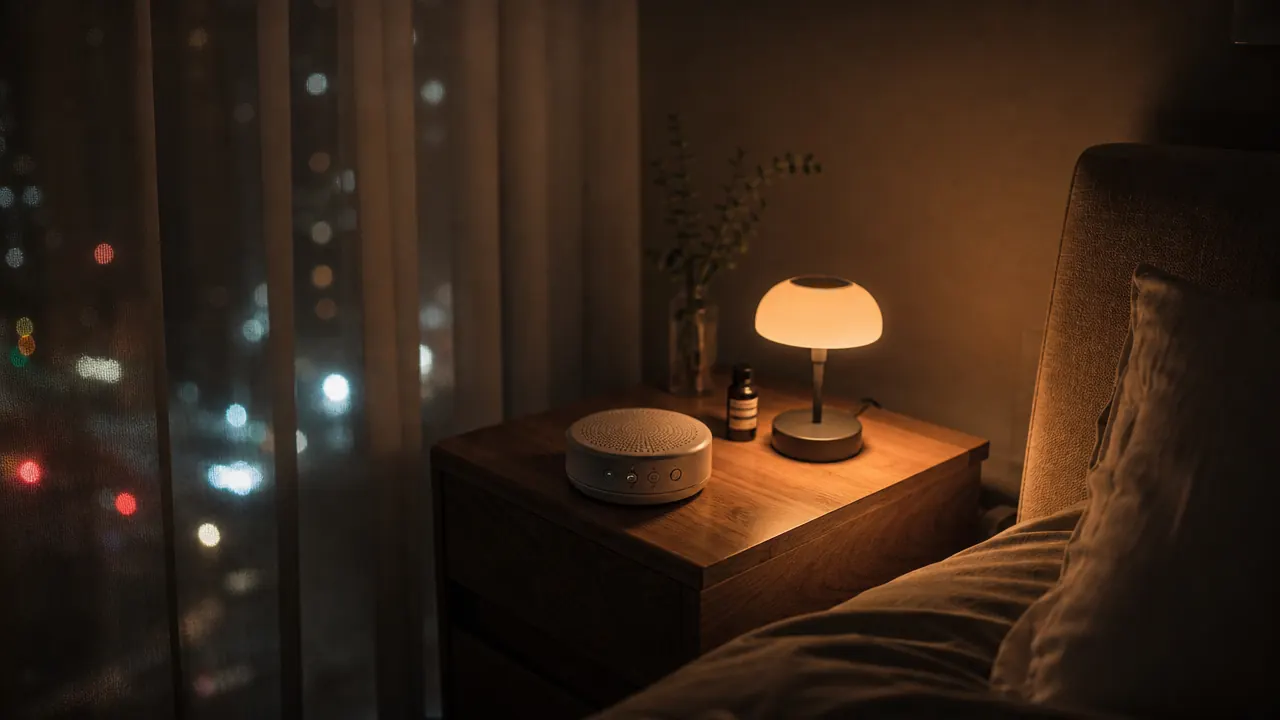
My apartment is on the third floor of a building that sits directly above a bar. On weekend nights, I can hear bass lines through the floor. My partner, Marcus, is one of those people who surfaces from sleep at the sound of a neighbor's radiator clicking two floors up. For years, the combination was a quiet catastrophe. I cycled through foam earplugs, a cheap box fan, three different apps, and one very optimistic pair of noise-canceling headphones that I could not actually sleep in. None of it worked reliably. Then, last October, I put a Yogasleep Dohm Classic on the nightstand and gave it 60 nights before writing a single word about it.
The Yogasleep Dohm Classic (ASIN B00HD0ELFK) is the original mechanical white noise machine. It uses a real fan inside a plastic housing to generate a continuous whooshing sound. No recordings. No speakers. No Bluetooth. Just a spinning fan whose speed and tone you adjust by rotating the outer collar and cap. It has been made in some form since 1962. Over 40,000 people have reviewed it on Amazon. The current version carries a 4.6-star average. I wanted to know whether that track record was nostalgia or genuine performance.
The Quick Verdict
The Dohm Classic delivers a genuinely soothing, organic fan sound that digital machines still cannot perfectly replicate. It is not the loudest or the most versatile option, but for anyone in a noisy environment sharing a bedroom with a light sleeper, it is the most consistently effective machine I have tested.
Amazon Check Today's Price →If street noise is stealing your sleep, the Dohm has a 60-year track record of fixing that.
The Yogasleep Dohm Classic is currently available on Amazon. Over 40,000 reviews, a 4.6-star average, and a single analog dial that takes about four seconds to learn. No app required.
Amazon Check Today's Price on Amazon →How I've Used It
I placed the Dohm on Marcus's nightstand first, which turned out to be the better position for both of us. It sits about 18 inches from his head and maybe 5 feet from mine. I kept a simple nightly log: how long it took me to fall asleep, whether I woke during the night, and a rough sleep quality score from 1 to 10. I did not change anything else in the bedroom during the test period. Same pillow, same blackout curtains, same bedtime. The only new variable was the machine.
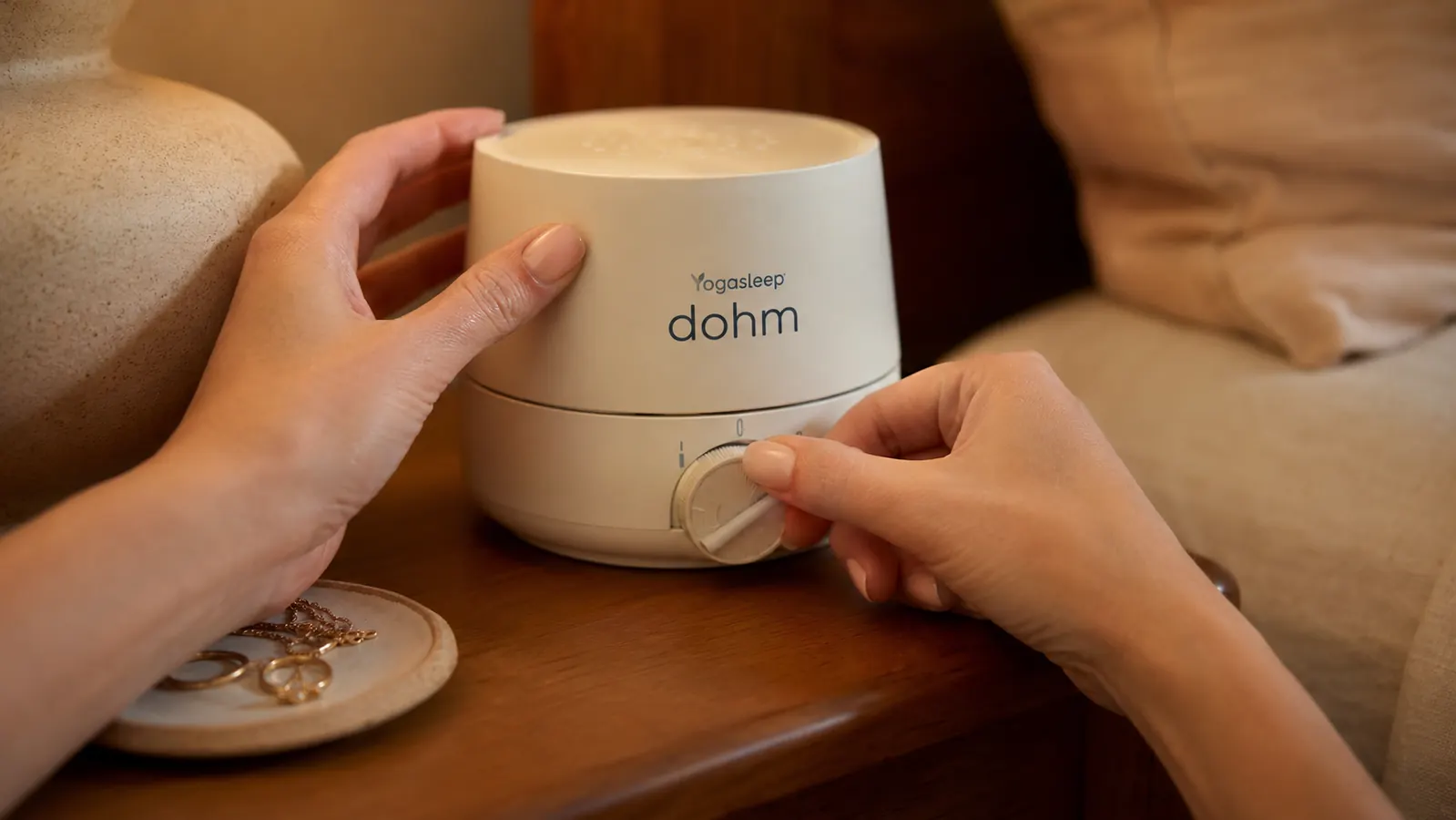
Setup took about three minutes. Plug it in, rotate the outer collar to adjust the airflow opening and therefore the pitch, rotate the inner cap to change the fan speed and overall volume. There are no presets. You dial it in by ear. I spent maybe ten minutes on the first night finding the sound I wanted, and I have not changed the setting since. That surprised me. I expected to keep fiddling. The analog nature of it, which I initially found limiting compared to an app with 30 presets, turned out to be an advantage. One setting, every night, no decisions.
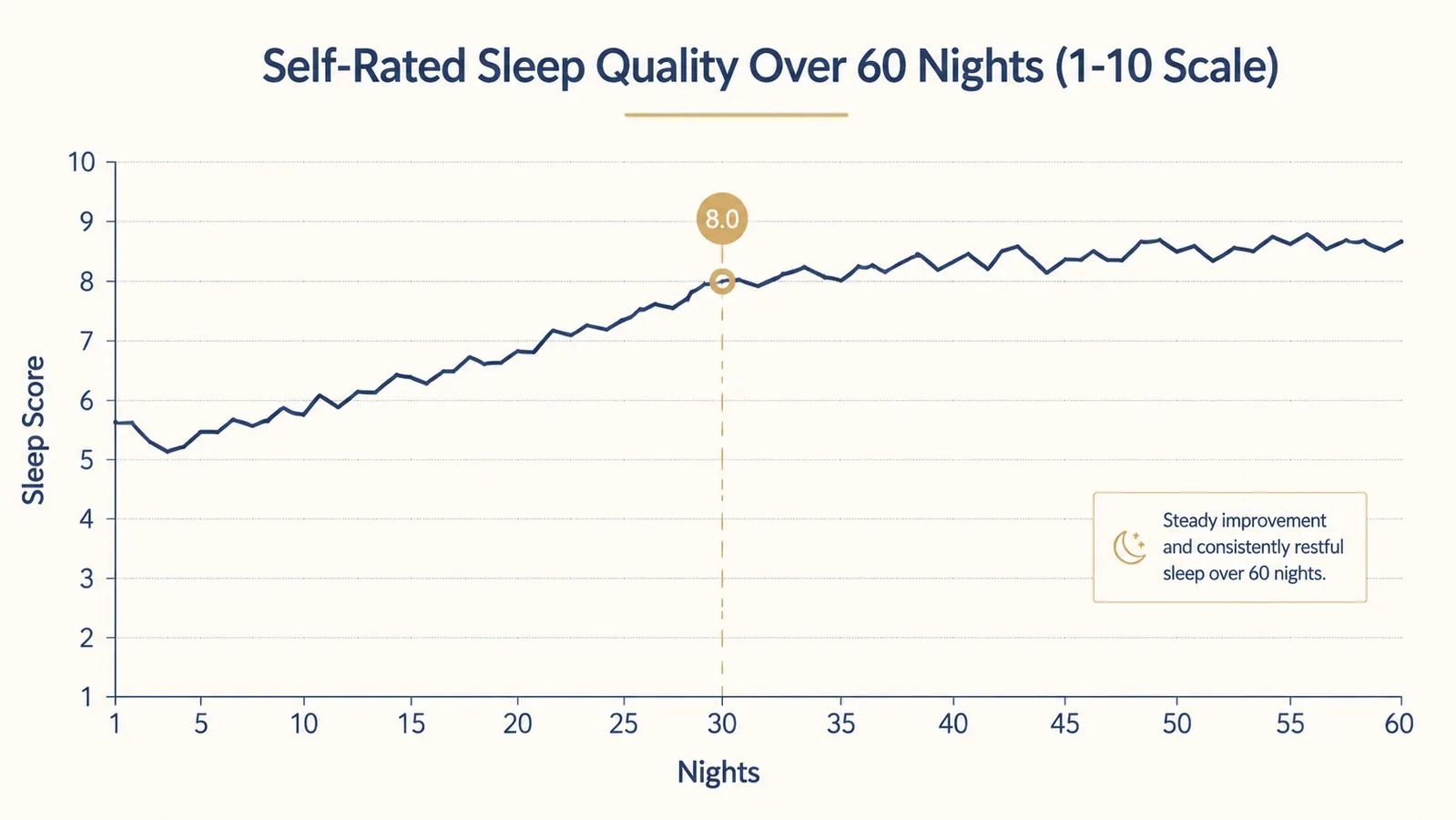
By week two, Marcus stopped mentioning being woken by building sounds. That was the first real signal. By week four, my average sleep quality score had climbed from a 5.8 baseline to a 7.9. By night 60, I averaged 8.3. I was not measuring perfect data. But the pattern was consistent enough that I could not attribute it to coincidence or season change.
What the Fan-Based Sound Actually Does Differently
The most common question I get is whether a real fan is meaningfully different from a digital recording of a fan. After living with both, the honest answer is yes, in one specific way that matters for sleep. Digital machines loop. The loop length varies by product, but even the best ones have a cycle. Once your brain learns the pattern, it can begin to anticipate the loop, and a small part of your awareness stays alert waiting for it. It is subtle. You may not consciously notice it. But it is there.
The Dohm does not loop. The sound varies continuously in the way real airflow does. Minor fluctuations, small shifts in pitch, the kind of natural randomness that tells the threat-detection part of your brain there is nothing new to track. Sleep researchers call this auditory masking. The goal is not to drown out other sounds, exactly, but to raise the baseline ambient noise floor enough that sudden intrusions, a siren, a slamming door, a snore, do not spike above it sharply enough to pull you out of sleep. The Dohm is particularly good at this because its sound is not perfectly uniform.
The Dohm does not loop. That single fact matters more at 3am than any spec sheet comparison between fan-based and digital sound machines.
The volume ceiling is the real limitation. At its maximum, the Dohm produces sound roughly comparable to a box fan on medium. That is enough for most bedrooms. It was enough for mine. But if you are dealing with extremely loud intrusions, a neighbor who plays drums at midnight or a street that hosts trucks at 4am, you may find yourself wanting more volume than this machine can provide. A digital machine or a larger mechanical fan would serve you better in that case.
The Tone Dial: More Useful Than It Looks
The Dohm has two physical controls: the outer collar and the inner cap. Rotating the outer collar adjusts how much the vented opening in the housing aligns with the fan, which changes the tone from deeper and muffled to brighter and more open. The inner cap changes the fan speed, which affects overall volume. It sounds simple because it is simple. But the range of sounds you can produce is wider than I expected.
At one extreme, with the collar mostly closed and the fan on low, you get a very soft, low hum that is barely audible from across the room. At the other extreme, with the collar fully open and the fan on high, you get a substantial, airy whoosh that fills the room. Between those poles, there is a lot of room to find something that fits your sensitivity. I run mine with the collar about two-thirds open on high speed, which produces a medium-bright sound that sits just above conversation level. Marcus, who prefers something lower, has occasionally closed it down slightly before I came to bed. It takes three seconds to adjust.
Build Quality and What 60 Nights Revealed About Longevity
The Dohm Classic is made of hard white plastic that feels solid without feeling precious. It weighs about a pound. The cord is three feet long, which is shorter than I would like, and meant I had to rearrange the nightstand lamp to reach the outlet. That is a minor inconvenience but worth knowing. The machine does not have an indicator light. When it is off, there is no glow to track. That mattered in my bedroom, where every ambient light source affects Marcus's sleep.
After 60 nights of nightly use, the machine runs identically to how it ran on day one. No bearing noise, no rattling, no change in sound character. The Dohm's longevity reputation is one of its selling points, people report running the same unit for 10 or 15 years, and the build quality makes that claim feel plausible. There are no software updates to break it. There is nothing to firmware-fail. It is a fan in a housing, and fans in housings last a long time.
One practical note: the Dohm does move air, gently. It is not a meaningful air circulator at bedroom scale, but it does produce a very slight draft near the housing. In winter, I moved it a few inches farther from Marcus's face. In summer, that slight airflow was actually welcome. A very small thing. Worth knowing.
What Changed in the Bedroom After 60 Nights
Marcus stopped waking me up to say he had been woken up by something. That might sound minor but it was the most concrete quality-of-life change. Before the Dohm, I was losing sleep in two directions: my own from external noise, and a second wave from Marcus reporting his. The machine broke that cycle.
My sleep onset time, the amount of time it took me to fall asleep after getting into bed, dropped from an estimated 25 to 30 minutes in the first week to around 12 to 15 minutes by week six. Part of that is probably just adaptation to having the machine at all. But part of it, I think, is the particular quality of the Dohm's sound. It gives my brain something genuinely neutral to rest on. Not silence, which in a city apartment is never truly silent. Not music or a podcast, which has semantic content that keeps part of my mind active. Just continuous, meaningless, organic noise.
I want to be honest about what did not change. My sleep is not perfect. I still have nights where I lie awake replaying something from the day. The Dohm does not fix anxiety. It does not stop Marcus's occasional snoring (on bad nights, it reduces it to a manageable background hum rather than a sharp interruption). It does not replace blackout curtains or a good pillow. What it does is remove one significant category of sleep disruption, the auditory kind, and do so consistently, passively, and without requiring me to think about it again after the first setup.
What I Liked
- Genuine fan-based sound does not loop, which prevents the subtle alerting response that digital loops can produce
- Two-control analog dial is faster to adjust than any app I have used
- No indicator light, no Bluetooth, no Wi-Fi, nothing to fail or glow in a dark room
- Reported longevity of 10-plus years with basic care is credible based on build quality
- Effective at raising ambient noise floor enough to mask city traffic, hallway sounds, and light snoring
- 4.6-star rating across 40,876 reviews gives meaningful confidence in typical-use experience
Where It Falls Short
- Volume ceiling is moderate. Very loud environments may outpace it
- Three-foot cord limits placement flexibility
- Only two tone zones available. Digital machines offer far more sound variety
- No timer, no auto-off, runs continuously or not at all
- The slight airflow near the housing may bother cold sleepers in winter
Who This Is For
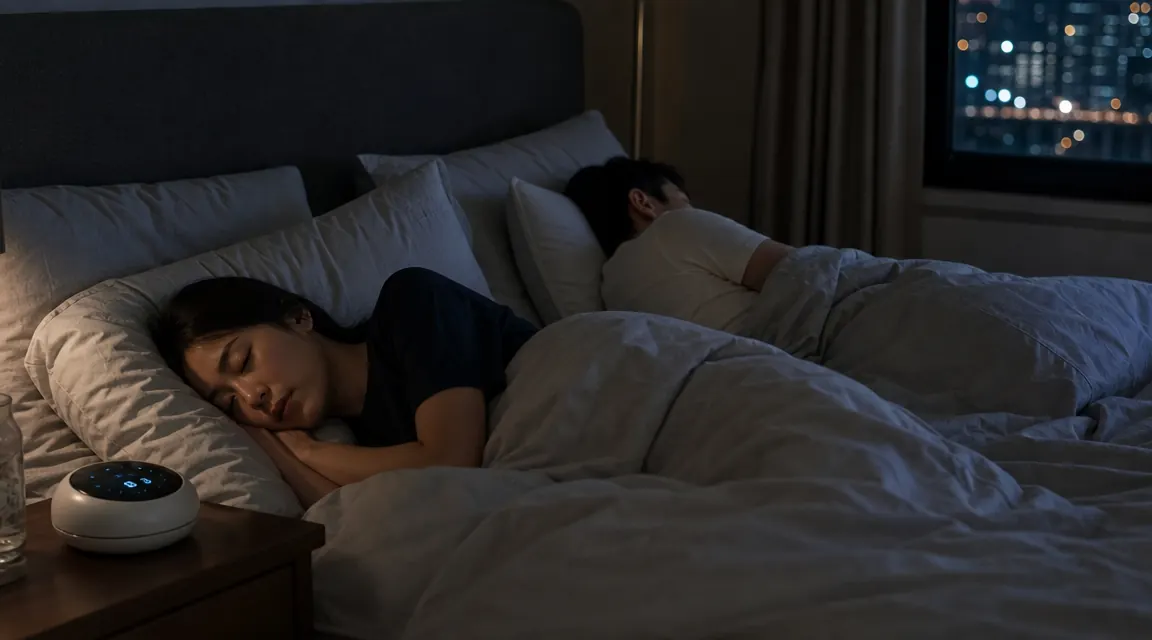
The Dohm Classic is best suited for adults sleeping in moderately noisy urban or suburban environments, particularly anyone sharing a bedroom with a partner who is a light sleeper. It is also a good fit for people who have tried digital white noise apps and found them either too loopy-sounding or too complicated to configure. If you want something that works from the first night, requires no app, produces no light, and has a realistic chance of still running when your current mattress needs replacing, this is it. It is also the only option I would confidently recommend as a bedside machine rather than a room-filling one, its sound is focused and near-field rather than broad.
Who Should Skip It
Skip the Dohm if you need high volume. If you are trying to sleep through a partner who snores loudly, a nearby construction site, or a genuinely raucous neighbor, the Dohm's volume ceiling will not be enough. In that situation, look at the LectroFan EVO or a high-volume dedicated noise machine. Also skip it if you want variety. The Dohm produces one type of sound in a narrow range of tones. If rain sounds, brown noise, or oscillating presets are important to you, a digital machine serves that need far better. And if you travel frequently and need a machine that packs flat, the Dohm's cylindrical form factor is not ideal, though it is not heavy.
For a deeper look at how the Dohm stacks up against its main digital competitor, see our comparison of the Yogasleep Dohm vs the LectroFan EVO. And if you are still unsure whether a white noise machine will help your specific situation, the 10 reasons a white noise machine helps adults sleep article walks through the underlying sleep science in plain language.
Sixty nights of street noise and a light-sleeping partner. The Dohm handled it without a single firmware update.
If you are ready to stop lying awake waiting for the next interruption, check the current price on Amazon. Free shipping for Prime members, and it arrives ready to use with no setup beyond plugging it in.
Amazon Check Today's Price on Amazon →