
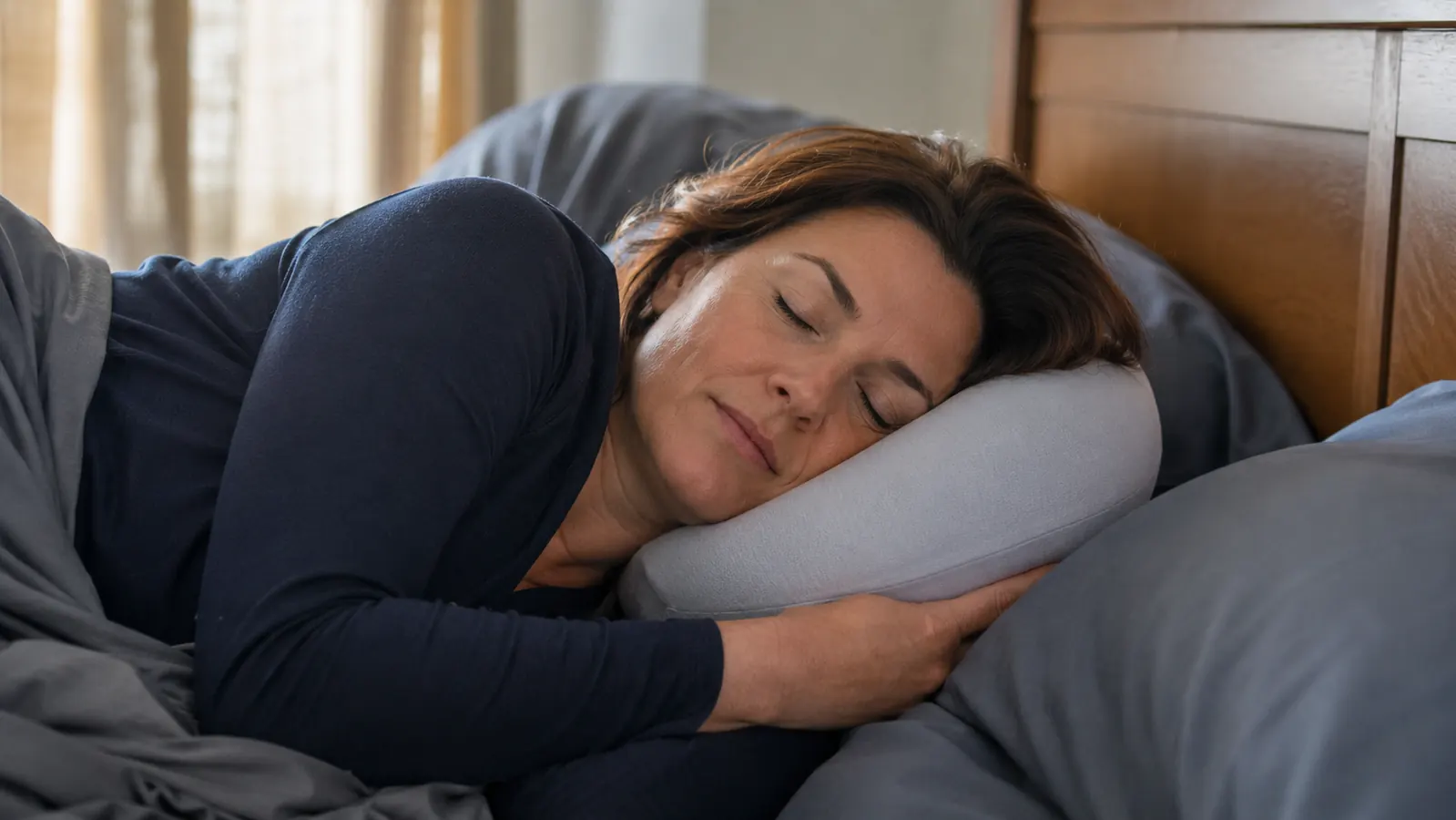
My neck hurt for most of my thirties. Not dramatically. Not herniated-disc hurt. Just that slow morning ache that starts between your shoulder and jaw and takes two cups of coffee and a hot shower to fully dissolve. My chiropractor called it classic side-sleeper cervical strain, said the problem was my pillow, and recommended I spend less time on my phone at night. I addressed exactly one of those suggestions. I switched pillows. About a dozen times.
The Coop Home Goods Original Crescent Adjustable Pillow arrived in a box smaller than I expected, at a price I had to talk myself into. Ninety-nine dollars for a pillow. The people who love these things really love them, with more than 65,000 Amazon reviews and a 4.5-star average. I spent sixty nights finding out whether that enthusiasm is justified. The short version: mostly yes, with one significant caveat that the reviews tend to gloss over.
The Quick Verdict
The best adjustable pillow I have owned. The crescent shape solves a real problem for side sleepers, and the fill system actually works once you get past the break-in period. Not perfect for hot sleepers and the initial foam smell is real.
Amazon Check Today's Price →If your neck hurts every morning, you have been sleeping on the wrong pillow.
The Coop Home Goods is adjustable, CertiPUR-US certified, and comes with a 100-night trial. Check today's price on Amazon before the list price goes up.
Amazon Check Today's Price on Amazon →How I've Used It
I sleep on my right side almost exclusively. I am 5'6", average build, and the distance from my ear to the tip of my shoulder is about five inches, which is pretty standard for women my size. Most pillow manufacturers lump everyone into "standard loft" and call it done. That loft is designed for back sleepers, which is why side sleepers have been quietly destroying their necks for decades.
When the Coop Home Goods arrived, the first thing I noticed was the smell. Shredded memory foam off-gasses, and this pillow was no exception. I left it out of the case for 48 hours before sleeping on it, which helped significantly. By night five, I couldn't detect anything. If you're sensitive to smells, plan for that window.
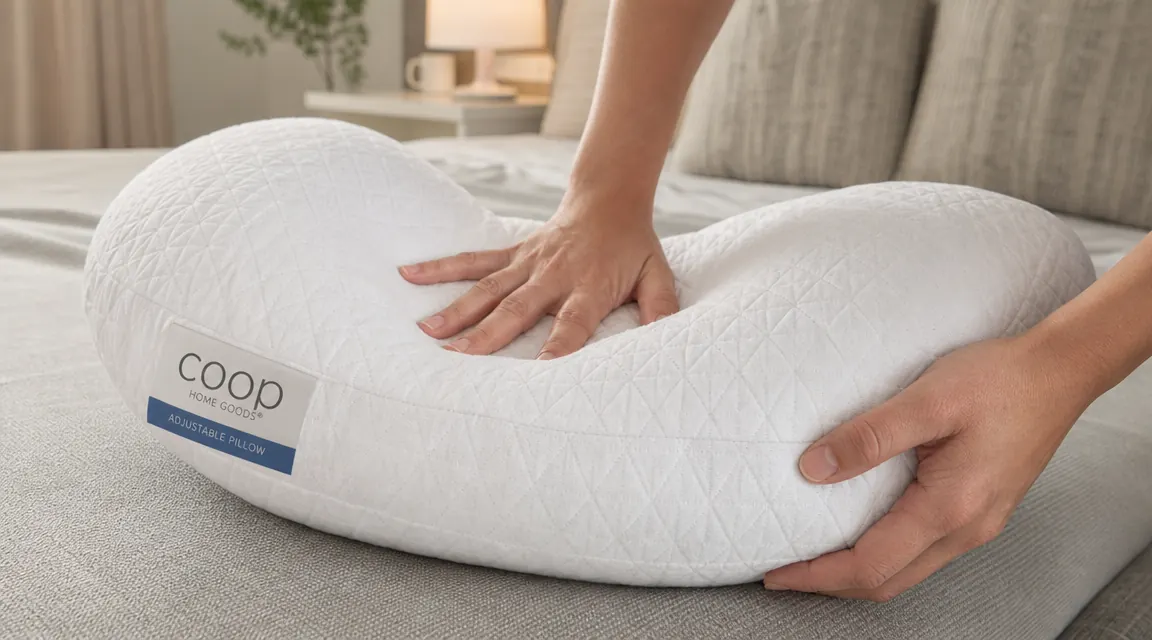
The crescent cutout is the main structural feature. It curves inward along the bottom edge, creating a notch that cups the shoulder rather than fighting against it. I have slept on regular-rectangle adjustable pillows before, including a Beckham Hotel Collection and a Purple Cloud pillow, and neither accounted for the fact that your shoulder is physically in the way when you side sleep. The Coop Crescent does. That curve lets my shoulder sit forward naturally instead of getting compressed under a flat pillow bottom edge.
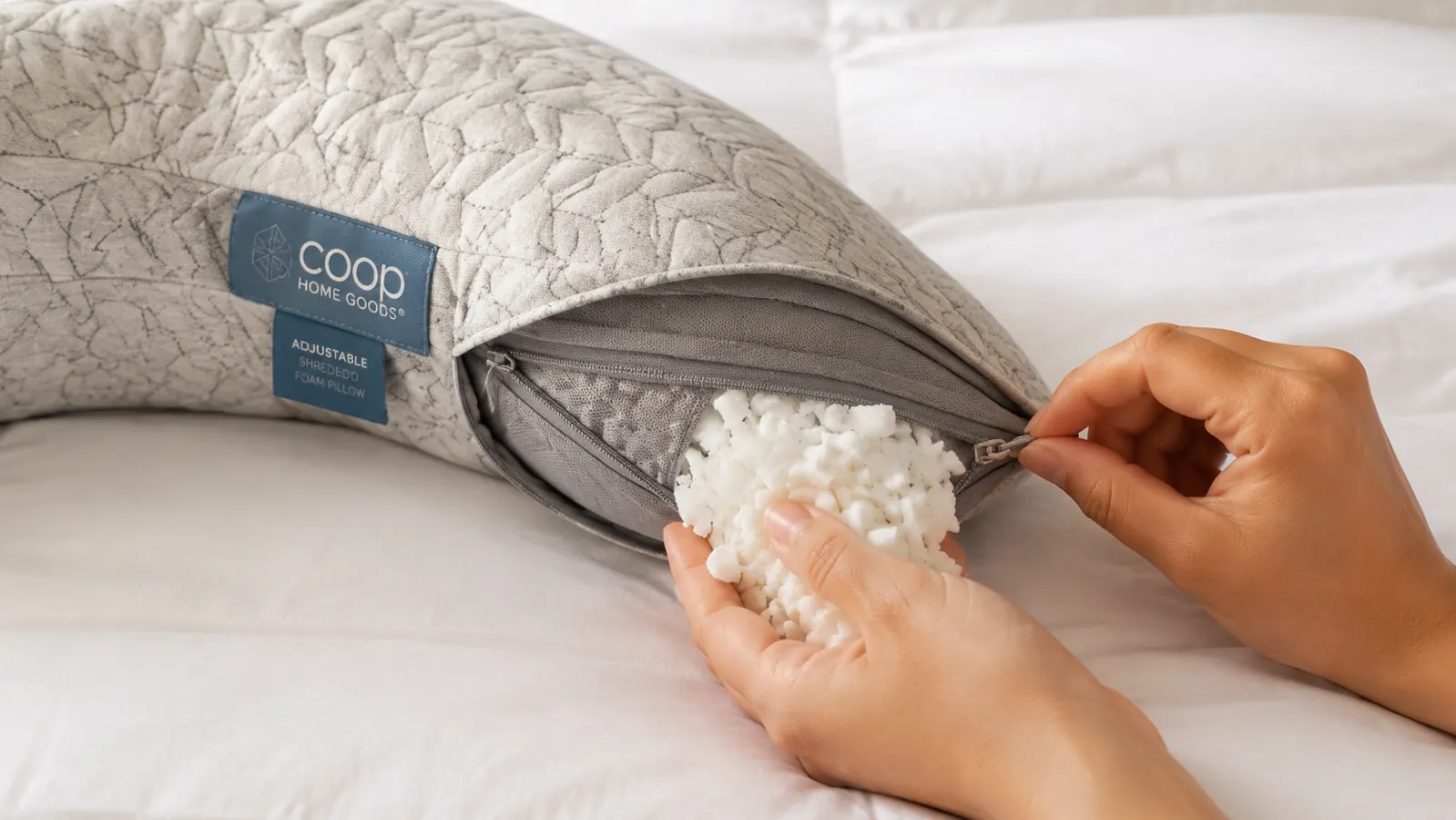
Adjustment took me three attempts before I found my sweet spot. The pillow ships overfilled, which is intentional. You pull out foam until the loft feels right, which for me meant removing approximately two generous handfuls. The inner zip is easy to operate, the foam pulls out cleanly, and the bag they include for storing the excess fill is a thoughtful touch. I've had adjustable pillows where the adjustment mechanism is technically present but practically impossible without getting foam dust everywhere. The Coop system is genuinely user-friendly.
The Fill: What Shredded Foam Actually Feels Like After 60 Nights
The fill is a blend of shredded memory foam and microfiber. Together they produce something that sits between the dead weight of a solid memory foam block and the limp flatness of a down pillow. It conforms to your head without bottoming out. It doesn't spring back aggressively the way latex does. If you have slept on a buckwheat hull pillow and hated how rigid it felt, this is the opposite end of that spectrum.
My main concern going in was clumping. Budget shredded foam pillows develop lumps within weeks and you spend half the night punching them back into shape. Sixty nights in, the Coop fill has migrated slightly but hasn't clumped in any meaningful way. I fluff it for about ten seconds every morning, which is roughly the same effort as fluffing a down pillow. The microfiber component seems to be what keeps the foam pieces from fusing into a single dense mass.
One thing I want to be honest about: after sixty nights, the pillow has compressed slightly from where I had it set at night one. Not dramatically, but I did add back a small amount of fill around night forty to restore the loft I started with. Whether that means the foam compresses permanently over time, I genuinely don't know yet. The sixty-night window may not be long enough to answer that question fairly. Based on what I've seen in longer-term reviews, most people readjust fill once or twice over the first year and then settle.
The crescent notch is not a gimmick. For side sleepers, it is the single most practical design change I have ever seen on a pillow.
Neck Support: What Changed (and What Didn't)
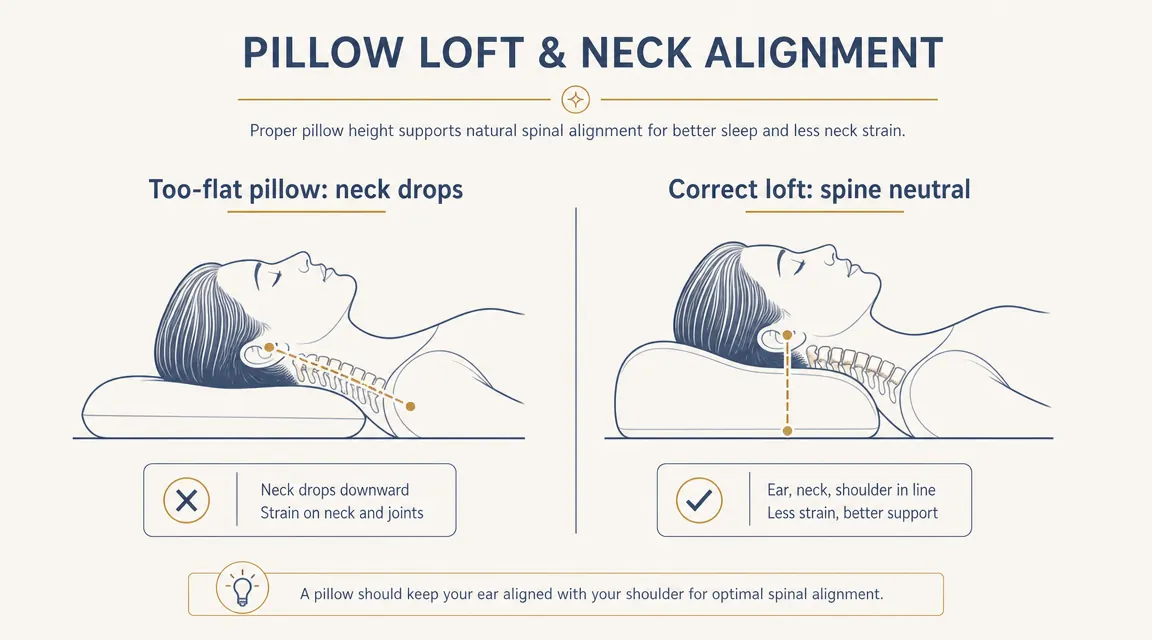
Within two weeks, the morning neck ache that I had been treating as background noise was noticeably quieter. Not gone, because I also sit at a desk for eight hours a day and that's its own issue. But the specific sensation of waking up with the right side of my neck tight and tender largely disappeared. By week four, it was gone on most mornings.
What the Coop Crescent does well is maintain consistent loft through the night. Polyester fill pillows slowly flatten as you sleep on them, so the support you have at 11pm is less than what you have at 3am. The shredded foam blend holds its shape better. I stopped waking up mid-night to punch my pillow back into shape, which had been such a regular habit that I'd stopped noticing I was doing it.
What it did not fix is my tendency to migrate from my right side to my back around 4am. When I ended up on my back on this pillow, it felt slightly too high because I had it set for side sleeping. That's not a design flaw so much as a reminder that adjustable pillows still require you to commit to a sleep position. If you're a combination sleeper who switches between side and back regularly, you may want to read our full comparison of the Coop versus the Purple Pillow, which handles position changes differently.
Temperature: The Honest Answer
I am a moderate heat sleeper. I don't soak sheets, but I run warm enough that I sleep with a window cracked year-round. The Coop Crescent is not a cold pillow. Memory foam retains heat; that is its fundamental nature. The microfiber blend and the breathable cover (a bamboo-derived viscose and polyester mix) make it better than a solid foam block, but if you are a hot sleeper who currently uses a cooling latex or buckwheat pillow, this will feel warmer to you. I did not wake up uncomfortable from heat, but the pillow surface was noticeably warmer than my cotton duvet cover by the middle of the night.
For most people this will not be a dealbreaker. For genuine hot sleepers, it is worth knowing before you buy.
Washing and Durability
The outer cover is machine washable and I have washed it twice during the sixty nights. It comes out of the dryer in good shape with no significant pilling or shrinkage. The inner pillow itself is also machine washable, which I have not tested yet because it requires a front-loading machine and my building has top-loaders with center agitators. That is a practical constraint worth flagging. If you have a top-loader with an agitator, plan on taking the pillow to a laundromat.

The zipper on the inner fill compartment has held up without issue. The outer cover zipper is a little stiff but functional. The stitching along the crescent notch shows no signs of stress after two months of nightly use, which was my main structural concern given that the curve puts some unusual tension on the seam when the pillow is compressed.
Alternatives I Considered
Before landing on the Coop Crescent, I had narrowed my search to three options. The Purple Pillow (the original grid version, not the Cloud) uses a polymer grid instead of foam and sleeps significantly cooler, but it's heavier and the firmness is non-adjustable. The Saatva Pillow is beautiful and feels expensive, but the loft adjustment is less granular than the Coop system. The Beckham Hotel Collection Budget Luxury pillow is seventy dollars less and feels like it. You can read a full breakdown in the Coop vs Purple Pillow comparison if you want the side-by-side on specs.
What kept bringing me back to the Coop Crescent specifically was the crescent shape. None of the other adjustable pillows I found addressed the shoulder clearance problem directly. It felt like a genuine design insight rather than a marketing differentiator.
What I Liked
- Crescent notch genuinely accommodates shoulder anatomy for side sleepers
- Fill adjustment system is easy and actually works
- Held loft consistently through sixty nights without major clumping
- Morning neck ache reduced noticeably within two weeks
- Cover washes well and dries without pilling
- 100-night trial removes the financial risk of trying it
Where It Falls Short
- Initial off-gassing smell requires 24-48 hours of airing before first use
- Runs warmer than latex or buckwheat alternatives
- Slight fill compression after six-plus weeks means occasional re-adjustment
- Inner pillow requires front-loading washer for machine washing
- At $99, it's a commitment for anyone not sure about shredded foam feel
Who This Is For
Side sleepers who wake up with neck stiffness and haven't found a pillow that holds its shape through the night. People who have tried both firm and soft pillows and been frustrated by both, because the adjustability actually resolves that binary choice. Anyone who has had a chiropractor tell them to change their pillow and then done nothing about it for eighteen months because the options are overwhelming. The Coop Crescent is also a reasonable choice for combination sleepers who favor their side but want a pillow that doesn't collapse when they shift to their back, as long as they dial in the loft on the higher end. You can also explore why adjustable pillows help side sleepers specifically if you want to understand the underlying mechanics before deciding.
Who Should Skip It
Hot sleepers who already struggle with overheating through the night. Strict back sleepers who don't need the crescent feature. Anyone who prefers a pillow that feels immediately perfect out of the box, because the adjustment and break-in process takes a few nights of patience. If you have a top-loading agitator washer and hygiene is a top concern, the washing logistics are more complicated than a typical pillow. And if ninety-nine dollars feels like too much to spend on a pillow right now, the one hundred night trial is meaningful but the initial spend is real.
Sixty nights changed my opinion of what a pillow can do for neck pain.
The Coop Crescent ships with extra fill, a free fill bag, and a 100-night trial period. If your pillow isn't working, there's no reason not to try it. Check current availability and today's price on Amazon.
Amazon Check Today's Price on Amazon →